.webp)
An unexpected engine noise can cause immediate anxiety for any luxury vehicle owner. For Jaguar and Land Rover (JLR) vehicles—especially those equipped with the AJ126 3.0L Supercharged V6 or the AJ133 5.0L V8—a ticking sound can range from normal mechanical behavior to an early warning sign of catastrophic engine failure.
To help owners and repair shops pinpoint the issue before a minor fault becomes a complete engine replacement, this guide breaks down the five most common causes of a ticking JLR engine.
If your engine sounds like a rapid, steady, high-pitched sewing machine, your vehicle is likely operating perfectly.
Modern JLR engines utilize Gasoline Direct Injection (GDI). The fuel injectors operate at immense pressures (exceeding 2,000 PSI) to atomize fuel directly into the combustion chamber. The rapid mechanical opening and closing of these injectors create a distinct clicking sound.
The sound is perfectly rhythmic, continuous, and loudest when you remove the plastic engine acoustic cover. It does not get aggressively louder or harsher under heavy acceleration.
If the ticking sounds more like a heavy rattle, clicking, or metal-on-metal slapping coming from the very front of the engine, shut the engine down immediately.
Early-generation JLR timing chain guides feature an aluminum backing with a steel oil-pressure pin. Over time, this steel pin punches a hole straight through the aluminum guide, creating slack in the chain.
The noise is most prominent during a cold start and may briefly disappear as oil pressure builds. Left unaddressed, the chain will jump timing teeth, causing the pistons to contact the valves and potentially destroy the engine.
If you hear a sharp, metallic tapping sound localized to the top left or top right sides of the engine (underneath the valve covers), you are likely dealing with a collapsed lifter.
JLR's factory-recommended 15,000-mile oil change intervals are notoriously too long. They can cause oil varnish and sludge to accumulate, plugging the microscopic oil ports inside the hydraulic lifters. Deprived of oil pressure, the lifter deflates, creating mechanical play between the lifter and the camshaft.
The tick speeds up exactly with engine RPM and is frequently accompanied by a dashboard check engine light with misfire codes (P0300 through P0308).
If the ticking noise sounds localized to the very center "V" of the engine and mimics the sound of a bag of marbles rotating around, the issue likely lies within your supercharger snout.
Factory superchargers feature a spring-loaded torsion isolator/coupler to dampen crankshaft vibrations. Over time, the internal spring wears the shaft, creating severe mechanical play.
The clacking or ticking is worst at a low, warm idle but usually disappears completely when engine speed exceeds approximately 1,200 RPM.
Before authorizing a major mechanical teardown, independent shops and owners should rule out two simpler possibilities.
JLR engines naturally consume oil and rely heavily on hydraulic pressure to keep timing tensioners and lifters quiet. If the oil level drops significantly, components can begin to click and tap.
A hairline crack in the exhaust manifold or a failed gasket allows pressurized exhaust gases to escape in sharp, rhythmic pulses. This can mimic a metallic valvetrain tick but often fades as the engine warms up and metal components expand.
While supercharger couplers and minor exhaust leaks are generally straightforward repairs, internal damage from timing chain failure or collapsed lifters can severely score camshafts, damage cylinder heads, and spread metal debris throughout the engine.
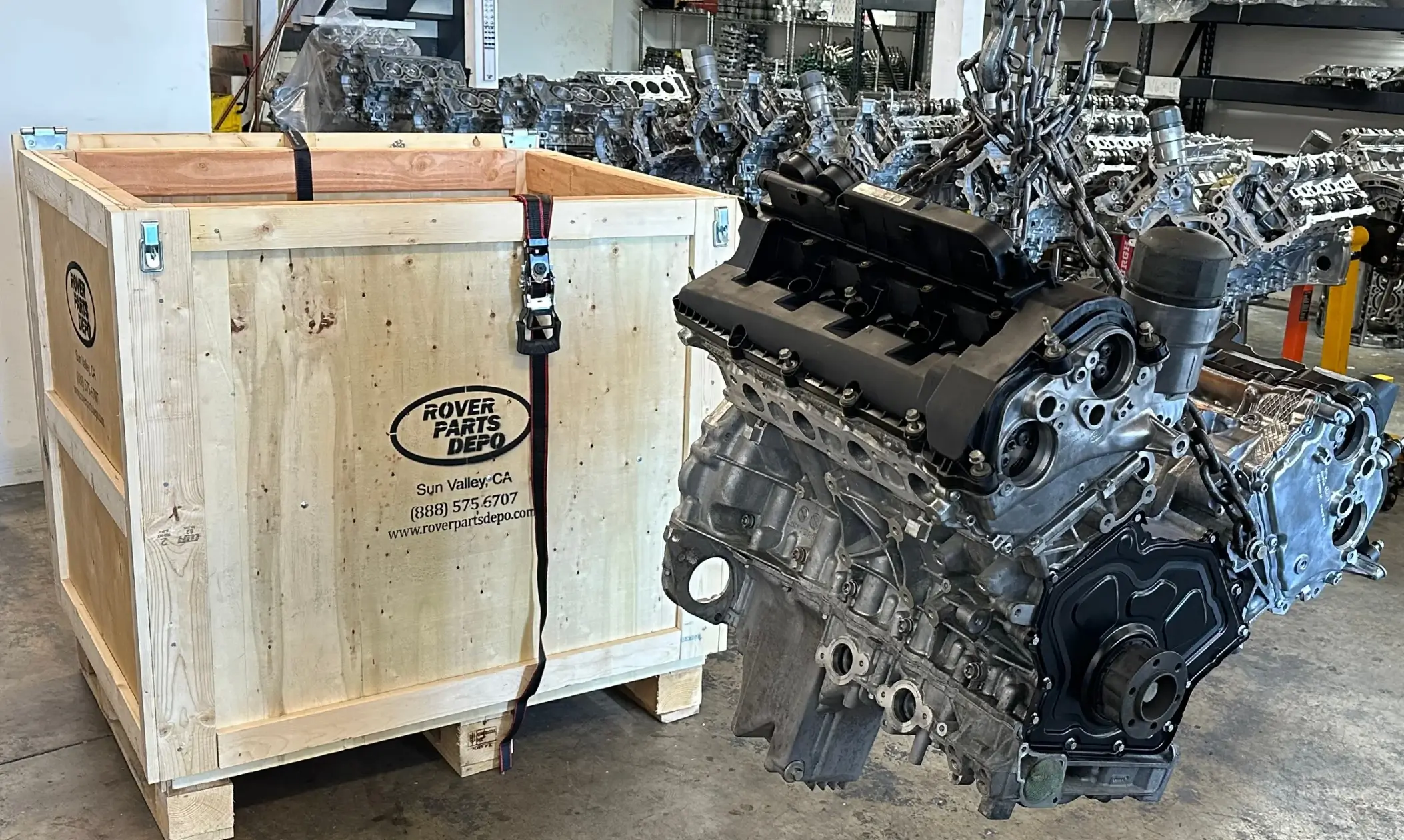
When a repair bill for timing chains, camshafts, and lifters approaches the cost of a complete overhaul, an engine replacement often becomes the most financially sound decision. At Rover Parts Depo, our remanufactured JLR engines are engineered to eliminate these factory flaws permanently by utilizing upgraded metal cooling pipes, updated timing components, and rigorous oil-pressure validation testing to ensure your Range Rover or Jaguar performs reliably for years to come.
If your ticking noise stems from a failed timing chain or collapsed lifters, independent shop labor and parts costs can easily exceed $7,000—without guaranteeing that metal debris hasn't contaminated the rest of your engine.
Save time, protect your investment, and get a permanent solution. Rover Parts Depo offers fully remanufactured JLR 3.0L and 5.0L engines built to outlast the original factory flaws.
Get a Fast, Free Remanufactured Engine Quote Today
%20(1).webp)